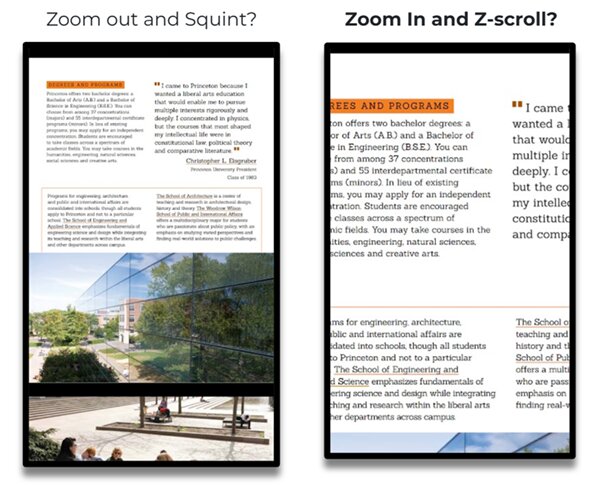
PDF files are created to be printed, not for online use. And if they have not been properly optimized, they can create significant barriers, especially for those accessing from smartphones and tablets, thus with small screens, for those with visual impairments, or those using assistive technologies, such as screen readers. What are the problems? PDF forms are difficult or impossible to fill out using only the keyboard; What alternatives should be preferred? Accessibility is not just a legal obligation, but a good practice that improves everyone's experience. See the Princeton University Guide
Making a PDF accessible is complex and expensive. Often it is simpler (and more inclusive) to rethink the format!
Webable SAS di Welzel Rossella, Via Dassori 29/20 B, 16131 Genoa (Italy) - VAT 02905340994 - rossella@webable.it

Recommended readings, events, websites on: Digital Accessibility
Avoid using PDFs on your website: they are not the best choice for accessibility
Avoid using PDFs on your website: they are not the best choice for accessibility
2025-03-27 10:15
2025-03-27 10:15
Rossella
Rossella
website, pdf, manuale,