Webable SAS di Welzel Rossella, Via Dassori 29/20 B, 16131 Genoa (Italy) - VAT 02905340994 - rossella@webable.it

Accessible websites
Accessible websites and digital documents
An accessible website guarantees all users, including people with disabilities, a fair and usable browsing experience. For this reason, public administrations and private companies must comply with the Web Content Accessibility Guidelines (WCAG)(web content accessibility guidelines) and the AGID Guidelines, adopted in Italy for public administration websites. Not only websites, but also digital documents (pdf, word, powerpoint) must be accessible.
Key principles for online accessibility
Clear and navigable structure:
- provide metadata and a sitemap to facilitate orientation;
- ensure navigation is possible using only the keyboard;
- logical and consistent order of content.
Readable and adaptable content:
- use semantic HTML tags for headings, lists, and links;
- include alternative texts (alt text) for non-decorative images;
- ensure adequate contrast between text and background;
- divide information into concise and well-organized blocks.
Compatibility with assistive technologies
- content must automatically adapt to the user's device;
- forms and buttons must be usable with keyboard or voice control;
- avoid flashing elements or horizontal scrolling that may disturb some sensitive users.
Adopting these principles means complying with regulations and making information accessible, improving the experience for all users.
Contact us for a consultation:
Why avoid
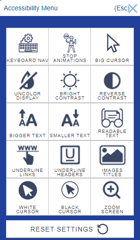
Accessibility Overlay Tools
Widgets known as accessibility overlay tools do not solve the accessibility problems of a website.
Instead of fixing the source code, they can interfere with the assistive technologies used by people with disabilities, such as screen readers, compromising their functioning.
Moreover, they deceive automated verification tools, making a site appear accessible even when it is not, making it difficult for users to report accessibility issues.
These solutions are often chosen for their quick implementation, but they do not represent a real answer to accessibility needs.
To guarantee an inclusive browsing experience, a site must be designed to be accessible from the start, following the WCAG guidelines
A truly accessible site does not need overlays or technical shortcuts: it already has code properly structured to be usable by everyone.