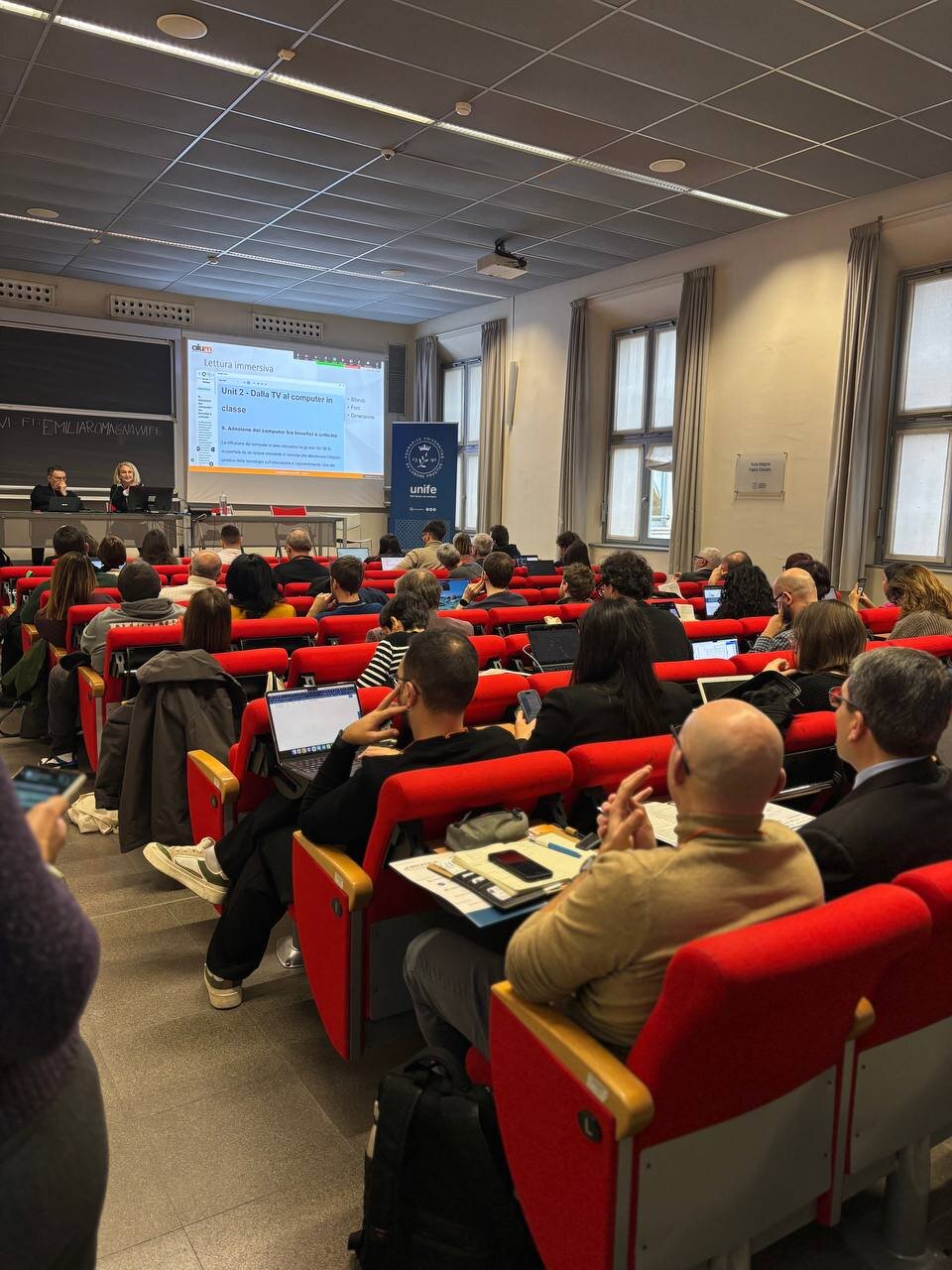
On the occasion of MoodleMoot Italia held in Ferrara in December 2025, I shared some reflections born from the direct analysis of several MOOCs hosted on the Italian Digital Education Hubs ALMA and EDVANCE. In my presentation, Designing Accessible and Inclusive MOOCs, I shared practical observations and concrete examples taken from courses developed by the Politecnico di Milano, the University of Naples Federico II, and the University of Florence. The goal is to show how small measures – such as complete transcriptions of video lessons, alternative texts for images and graphics, and a more conscious use of Moodle pages in HTML format – can significantly improve the accessibility of online courses. Making MOOCs more inclusive does not only mean meeting regulatory requirements, but designing digital teaching that can adapt to the different needs of students, even in less than ideal study contexts.
View the slides
Webable SAS di Welzel Rossella, Via Dassori 29/20 B, 16131 Genoa (Italy) - VAT 02905340994 - rossella@webable.it

Recommended readings, events, websites on: Digital Accessibility
Designing accessible and inclusive MOOCs, observations and experiences from Italian Digital Education Hubs
Designing accessible and inclusive MOOCs, observations and experiences from Italian Digital Education Hubs
2026-01-07 16:01
2026-01-07 16:01
Rossella
Rossella
events, moodle, elearning, mooc,